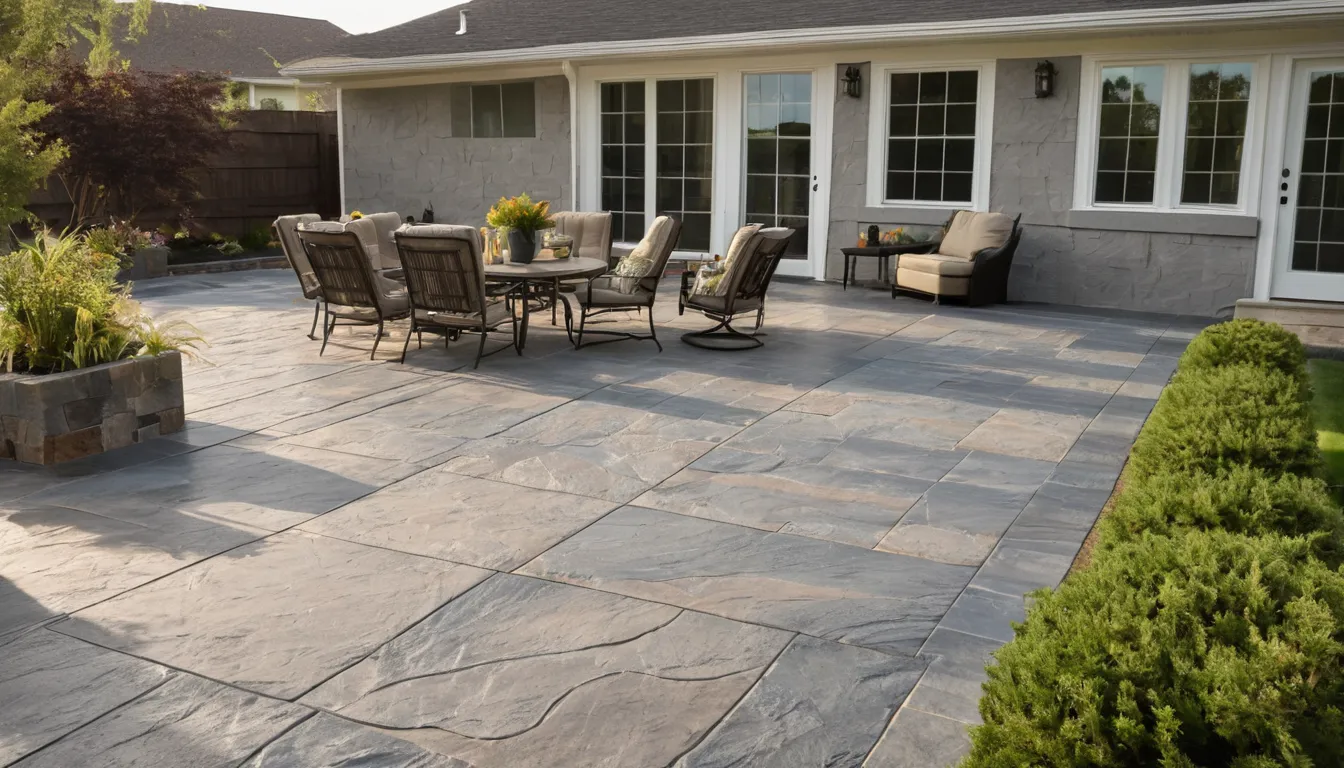
Stamped Concrete for Patios, Walkways and Driveways
Have you been eyeing a patio that looks like natural stone but worry about the price and the upkeep? Stamped concrete may be the answer. A provider pours the slab, adds color, and presses in a pattern while the surface is still soft. The result looks like slate, brick, or wood, yet it behaves like a single piece of concrete.
Decdramatic Concrete is a referral service. We do not pour or stamp anything ourselves. We connect homeowners in the Eagle area with independent local providers who do. This page explains how the work goes, what affects the price, and how to care for the finished surface so it stays handsome for years.
Is stamped concrete a good fit for my home?
Possibly! Stamped concrete is ordinary poured concrete with color added and a pattern pressed into the top. It can copy slate, brick, cobblestone, or even wood planks. Many homeowners like it for stamped concrete patios, walkways, and pool surrounds. Independent providers in our network handle the work. Decdramatic Concrete simply helps you reach one.
How is stamped concrete actually made?
It happens in stages, and each one matters. Here is the short version.
What comes first?
The provider marks the area, removes sod, and builds a compacted gravel base. Forms hold the edges in place. In places with cold winters and deep frost, this base does a lot of quiet work underground.
Where does the color come from?
Color can be mixed into the concrete, dusted on the surface, or added later as a stain. Many jobs use two layers for a natural, uneven look. A release powder keeps the stamps from sticking.
When does the pattern go in?
Timing is the trick. The concrete must be firm enough to hold its shape but soft enough to take the print. Providers press rubber mats by hand across the surface, then cut joints once it hardens.
Why does sealer matter?
Sealer goes on after the slab cures. It deepens the color and helps block water and stains. Think of it as the raincoat for your patio.
Which patterns and colors can I choose?
Here is the fun part. Popular patterns include ashlar slate, cobblestone, running-bond brick, flagstone, and wood plank. Colors run from warm tan and soft gray to charcoal and brick red.
A simple tip: echo something you already own. Pick a tone that nods to your roof, siding, or trim. On bungalows and ranch homes, earthy tones often look calm and settled.
Where does stamped concrete work well?
It shines on flat, open areas that get seen often. Common spots include:
- Back patios and seating areas
- Front walks and porch landings
- Pool decks and hot tub pads
- Driveways and entry aprons
Wet areas need extra thought. Ask the provider about a textured or slip-resistant sealer, especially where summer thunderstorms soak the surface.
Will it hold up through harsh weather?
Good question, since frost, hail, and spring flooding all test a slab. A well-built base, the right concrete mix, and properly placed joints help the surface handle them. Hail may dull a sealer, but a sound slab usually shrugs it off. Ask each provider how they prepare for deep frost.
Stamped concrete or pavers: which one wins?
Neither wins every time. Pavers are individual pieces. They can be lifted and reset, but joints may sprout weeds or shift over the years. Stamped concrete is one continuous slab with fewer joints to maintain. Cracks can still appear, and matching color on a patch is tricky. If you prefer a clean, seamless look, stamped is worth a close look.
How long does a stamped concrete project take?
Most patios take a few working days for prep, pouring, and stamping. Then the slab needs time to cure. Foot traffic is often fine after a few days. Vehicles usually need to wait longer. Rain or cold can shift the schedule, so ask the provider for a realistic plan.
How do I care for it once it is done?
This is where "plan the upkeep" pays off. A little routine keeps color rich and the surface sound.
How often should I reseal?
Many providers suggest resealing every two to three years. Wear, sun, and foot traffic change that, so ask what fits your slab.
What should I clean it with?
A broom, a hose, and mild soap do most of the job. Skip harsh acids and wire brushes.
Is winter salt a problem?
It can be. Rock salt and some de-icers can pit and dull the surface. Try sand for traction, or ask about concrete-safe products.
Where should the water go?
Check that downspouts and sump pump lines drain away from the slab. Pooling water during spring flooding is hard on any surface.
What if I spot a small crack?
Seal small cracks early, before water gets in. Trouble that shows up at the house itself, like sticking doors or cracks in a foundation wall, is a different job. That calls for foundation repair experts, not flatwork providers.
How do I choose a stamped concrete provider?
Ask before you pour. A short list of questions helps a lot:
- Can you show finished stamped projects?
- How do you prepare the base for frost?
- What sealer do you use, and how often should I redo it?
- Is the quote written, with materials and cleanup listed?
- Who handles permits, if any are needed?
A good provider answers plainly. If answers feel vague, keep looking.
What is the easiest next step?
Pour it right the first time. Tell us about your project, and we will point you toward independent providers in your area who handle concrete flatwork. Request an estimate and compare written quotes with no obligation.
What's Included
Pattern Stamping
Mats press stone, brick, or wood textures into the surface while the concrete is soft.
Color and Staining
Integral color, surface powders, and stains build natural-looking tones that suit your home.
Base and Forming
Providers prepare a compacted gravel base and set forms so the slab drains well.
Sealing and Finishing
A protective sealer deepens color and helps the finished slab resist water and stains.
What Stamped Concrete Typically Costs
Prices vary by region, size, pattern, and site conditions. These are typical U.S. ranges only, so get a written quote from a provider before you plan your budget.
| Item | Typical range | Notes |
|---|---|---|
| Stamped patio, per sq ft | $12 – $20 | Simple patterns cost less than multi-tone designs |
| Stamped driveway, per sq ft | $14 – $26 | Thicker slab and heavier base add cost |
| Stamped walkway, per sq ft | $12 – $22 | Narrow, curved paths take more labor |
| Added color or stain, per sq ft | $1 – $4 | Layered colors usually cost more |
| Border or accent bands, per sq ft | $2 – $6 | Contrast borders frame the pattern |
| Old slab removal, per sq ft | $2 – $6 | Needed when replacing a worn surface |
How It Works
Tell Us Your Plans
Share your project size, pattern ideas, and timing through the request form or by calling.
Get Matched Locally
We connect you with an independent provider in our network who handles stamped concrete flatwork.
Compare Written Quotes
Review the pattern, color, base, and sealer details in writing before choosing anyone.
Plan the Upkeep
Ask your provider for a care schedule so the finished slab stays strong.
Why Call Decdramatic Concrete
Less Searching, More Planning
Reach independent local providers through one simple request instead of sorting through endless listings.
Local Providers
Providers in our network know frost depth, drainage, and weather in your area.
Honest Process
We refer you only. Independent providers do the work and write the quote.
Upkeep Advice
Get simple tips for sealing and care so your new slab lasts.
Other Services
Need stamped concrete in Eagle?
Planning a driveway, stamped finish or patio? Request a callback to check provider availability, or send your details and request an estimate. No obligation.
No obligationStamped Concrete FAQ
How long does stamped concrete last?
With a solid base, proper joints, and regular resealing, stamped concrete can last for decades. Climate, drainage, and de-icing salts all affect lifespan, so ask your provider for care advice.
Does stamped concrete crack?
Any concrete can crack, including stamped. Providers cut control joints to guide where cracking happens, and a good base reduces movement. Small cracks can often be sealed early, while larger ones may need a provider's assessment.
Is stamped concrete slippery when wet?
It can be, especially with glossy sealers. Many providers add a slip-resistant additive or choose a textured finish. Mention pool decks, steps, or shady spots when you request an estimate.
Tell us what happened
Planning a driveway, stamped finish or patio? Request a callback to check provider availability, or send your details and request an estimate. No obligation.
No obligation